Does Fine Line Tattooing Hurt?
The reputation tattoos have for being painful is often the biggest obstacle for people. Over the years, I’ve had countless conversations with people who love the aesthetic but hesitate simply because they are afraid of the discomfort. If you are in that position, there is a different perspective you should consider.
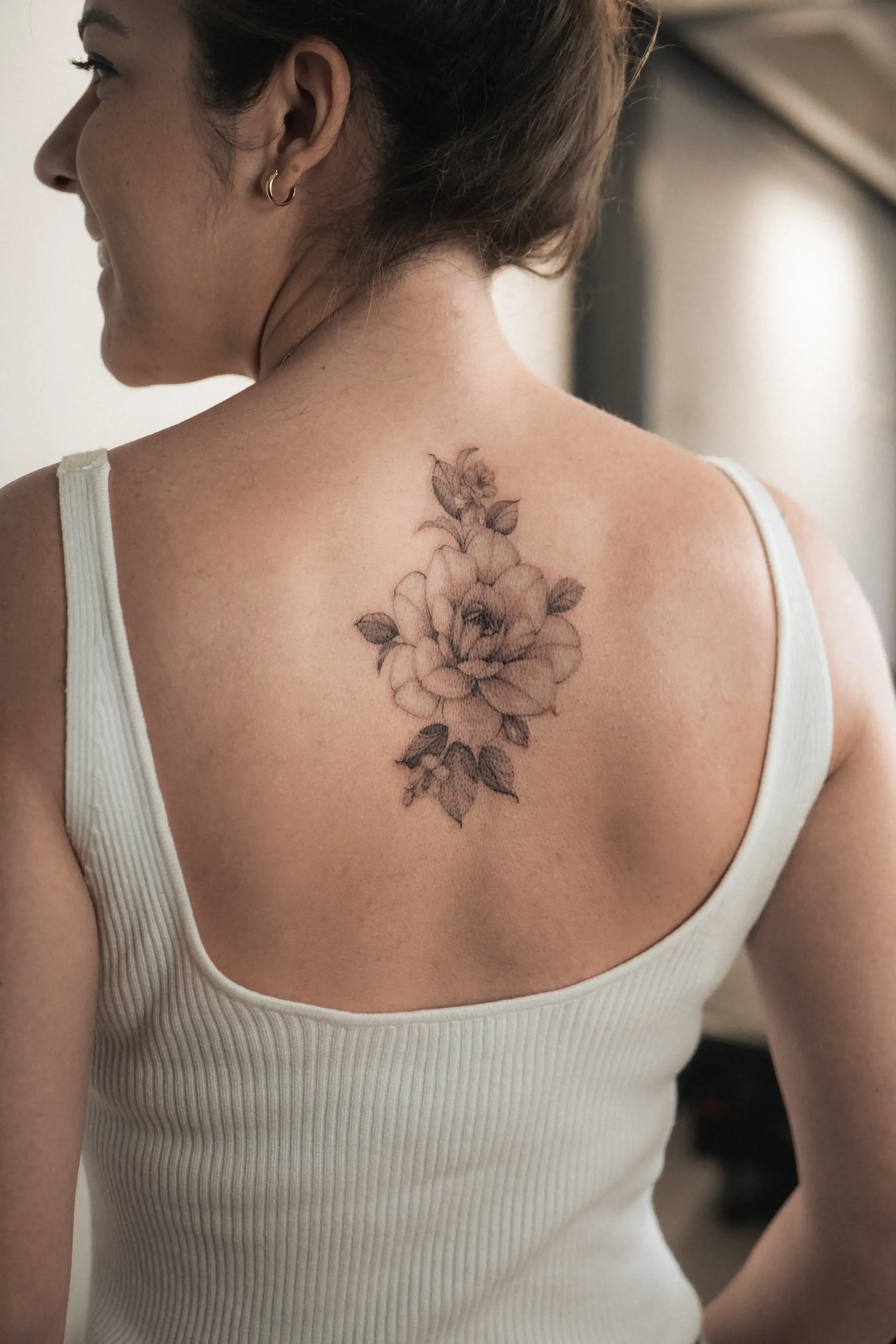
Camellia and cherry flowers.
Rethinking the Tattoo Experience
The reputation tattoos have for being painful is often the biggest obstacle for people. Over the years, I’ve had countless conversations with people who love the aesthetic but hesitate because they are afraid of the discomfort. If you are in that position, there is a different perspective you should consider.
A change in the technique
When I began my career, I worked in a traditional style. The needles were thicker and the process is naturally more aggressive, which meant I often saw my clients struggle through their sessions. It wasn't an experience I enjoyed providing.
Switching to fine line work changed that entirely. Because the technique is significantly more gentle, the trauma to the skin is minimal. My clients now consistently rate their pain at a 1 or 2 out of 10. It is quite common for people to actually fall asleep during the process, often describing the sensation as calming or even therapeutic.
Why fine line is different
In tattooing, pain is a direct result of skin trauma. Traditional techniques requires more pressure and multiple passes, whereas fine line uses much thinner needles and a lighter touch. Most people describe the feeling as a light scratching rather than a sharp or unbearable pain.
Of course, placement still plays a role. Areas where the bone is close to the surface like the ribs, spine, or fingers, will always be more sensitive. However, even in those spots, the fine line approach makes the sensation entirely manageable.
preparing for your session
How you treat your body in the days leading up to an appointment makes a significant difference in how you handle the sensation. To ensure the best experience, I recommend a few practical steps:
Nutrition: Focus on fresh, nutritious meals and avoid heavily processed foods or alcohol, those can trigger inflammation. This helps both your comfort level during the session and your body’s ability to heal afterward.
Hydration: Drink plenty of water. Well-hydrated skin is more elastic, easier to work with, and less sensitive to the needle.
Rest: A good night's sleep is essential. Being tired lowers your pain threshold and makes it harder to stay relaxed.
Comfort: Wear soft, loose-fitting clothing. Feeling physically restricted can add unnecessary stress to the experience.
Scheduling: Try to keep your schedule clear after your appointment so you can go home and relax.
The anticipation is almost always the hardest part of the process. Most people walk out of the studio not just with a new piece of art, they also feel a real sense of achievement, realizing their body was capable of handling it far better than they imagined.
If you're considering a fine line tattoo in London and have concerns about pain or the process, reach out. I'm here to answer your questions.